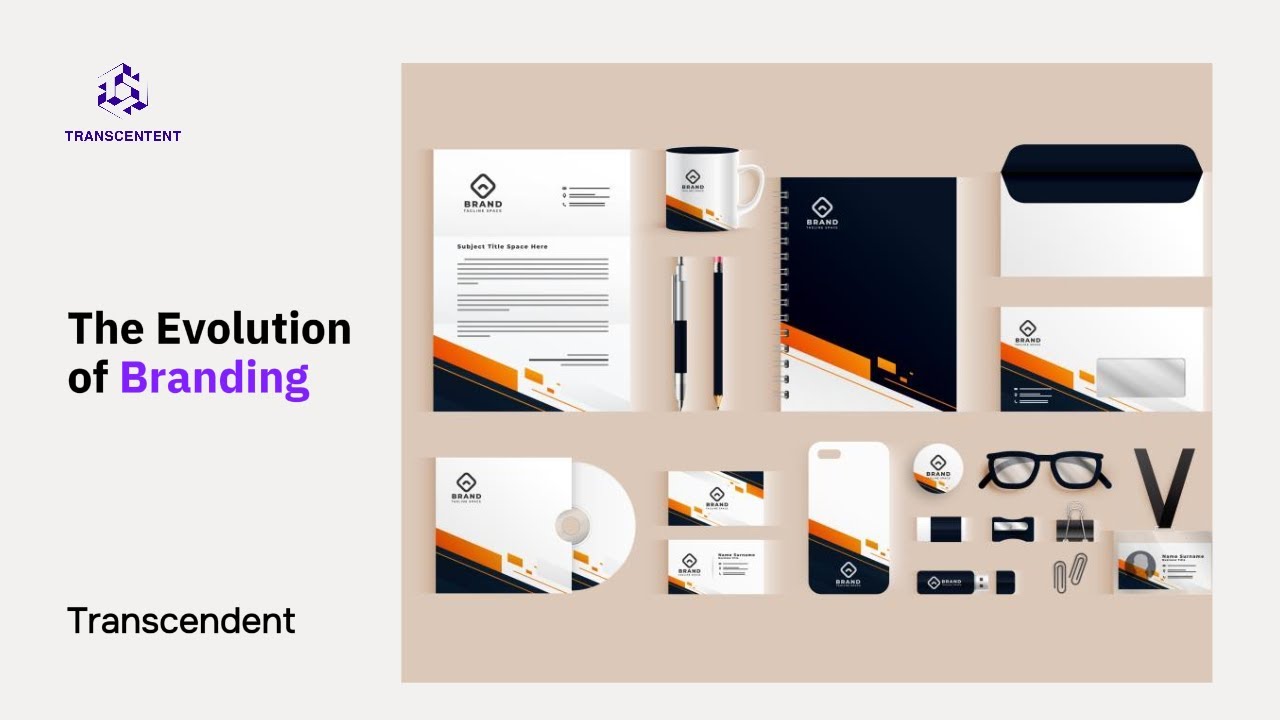
Introduction to branding. #001
Branding is a comprehensive process that goes beyond simple design, focusing on effectively communicating a company’s unique message. It involves long-term collaboration between branding strategists and clients, utilizing research and strategy to create cohesive visual systems that include logos, typography, and imagery. This course aims to elevate designers from merely creating logos to becoming essential partners in branding efforts.
The Evolution of Branding, #002
Branding originated from the need for creators to identify their work, starting with symbols on pottery. Throughout history, these symbols communicated messages and represented beliefs in various cultures. By the 18th century, proprietary marks on porcelain and cattle branding became common, evolving into a crucial method for distinguishing products during the Industrial Revolution.

The Evolution of Branding Before 1950. #003 Part-1
In the early 20th century, consumer choices were limited, but mass production and better transportation expanded options significantly. Companies like Morton Salt and Coca-Cola adapted their branding strategies to stand out in a competitive market, using memorable slogans and unique product designs to build their reputations.
The Evolution of Branding Before 1950. #003 Part-2
Successful companies recognized the need for emotional connections with audiences, moving beyond product benefits to portray lifestyles filled with romance and happiness. By the late 1950s, modern branding principles emerged, focusing on brand awareness and audience loyalty, further amplified by television and the internet.
The Evolution of Branding from 1950 to Today, #004
Television became the leading advertising medium after 1950, shifting focus to visual communication. Brands learned the importance of a consistent visual message to stand out, as exemplified by Volkswagen and Coca-Cola’s iconic campaigns. The rise of the internet and social media has added complexity to branding, making a clear, unified message essential across various platforms.
Understanding the True Meaning of What is Brand?, #005
Branding is often misunderstood, encompassing more than just logos; it represents an organization’s promise, reputation, and core idea. A logo identifies, while a brand fosters emotional connections and loyalty. Successful branding creates advocates among consumers, shaped by public perception rather than solely by the organization.
What Defines a Brand?, #006
Branding is often misunderstood, encompassing more than just logos; it represents an organization’s promise, reputation, and core idea. A logo identifies, while a brand fosters emotional connections and loyalty. Successful branding creates advocates among consumers, shaped by public perception rather than solely by the organization.
Why get bothered? The Importance of Effective Brand Management. #007
A strong brand presence is essential for increasing value and shaping perception in a competitive market. Effective branding distinguishes products, as seen with Morton Salt and Starbucks, where consumer loyalty is driven by consistent messaging and brand experience. Perception, often more impactful than reality, influences purchasing decisions and necessitates continuous brand management.
The Role of a Graphic Designer in Brand Development, #008
Graphic designers play a crucial role in brand management by focusing on visual communication and identifying issues like unclear messaging or poor reputation. Understanding a brand’s essence, as demonstrated in the VH1 case, helps create effective visuals that align with a clear mission. Designers must collaborate with clients to refine brand messages and ensure consistency across all visual elements.
Comprehensive Guide to Effective Branding, #009
Branding today goes beyond logos—it requires a clear communication strategy. Designers must understand the client’s message, audience, and tone through research and collaboration. A strong brand identity includes a recognizable logo, consistent visual elements, and alignment with the brand’s core values. The process is iterative, requiring client feedback and adaptability to ensure clarity and impact.
Essentials of Brand Strategy, #010
A struggling client wants a logo, but deeper issues likely exist. A new logo alone won’t fix fundamental problems. To truly help and build a lasting relationship, I need to investigate the brand thoroughly. This involves understanding the current (and desired) brand strategy and message, the current and future target audience, and the competitive landscape (both direct and indirect). Identifying the client’s core values, which underpin their operations and messaging, is also crucial. This investigative process requires direct engagement with various stakeholders to uncover the real issues and collaboratively define the brand effectively.
The Importance of Research in Design Projects, #011
The author emphasizes the importance of thorough research in design projects, advocating for conversations with clients and employees to understand brand strategy, competition, and audience. This foundational knowledge is crucial for effective targeted marketing and aligning design with the company’s values and goals.
Conducting Effective Client Interviews, #012
Face-to-face meetings (or video calls) are essential for effective client communication. Keep discussions confidential, ask open-ended questions, and focus on “what,” “who,” and “how” to gather insights. Take handwritten notes, avoid leading questions, and maintain a professional yet comfortable atmosphere.
Strategic Problem-Solving in Brand Management, #013
Time to synthesize research into a clear brand strategy by collaborating with the client to define core values (CEO’s vision is key), assess current communication (clarity, consistency), and prepare for exploring audience, competition, and media solutions. The goal is a focused approach for message, visuals, and media choices.
Developing a Strategic Problem-Solving Plan, #014
This outlines the critical research needed to develop a communication and visual strategy. It emphasizes identifying primary and secondary audiences (comparing interview insights with data), defining the ideal audience based on CEO goals, pinpointing direct and indirect competitors, analyzing current outreach methods (including all online presence), understanding how the company presents itself publicly (considering media effectiveness), and examining internal communication of values. The process aims to provide a factual foundation for informed design and media choices.
Crafting Persuasive Presentations of Design. #015
Effective design presentations persuade by logically connecting creative solutions to client needs and data. Format clearly for various outputs, restate the assignment as questions with answers per page, incorporate mission/values (visually), analyze existing visuals tactfully, and end with a clear call to action.
Developing a Strong Visual Identity System. #016
Summery
Creating a strong brand identity goes beyond just designing a logo. A brand identity system ensures consistency in messaging and visuals. It includes elements like the logo, typography, color palette, iconography, and image style, all working together to make the brand recognizable.
The Fundamentals of Logo Design, Part 1, #017
Summery
Fundamentals of Logo Design: A Summary A well-designed logo is more than just an image—it serves as a brand identifier, not a descriptor. The most effective logos are simple, memorable, and versatile, allowing brands to expand without limitations. Here are the key principles:
The Fundamentals of Logo Design, Part 2, #018
Summery
This passage outlines three crucial rules for effective logo design, building on previous guidelines.
First, a logo should be neutral and adaptable. It shouldn’t be so specific to a current product or service that it restricts a company’s future growth or changes in direction. The Apple logo is used as an example of a neutral design that allowed the company to expand beyond its initial focus.
Second, the logo acts as the foundation of the visual system, not the entire story itself. Designers should always present a logo in context, showing how it functions within the complete identity system (e.g., on letterhead, brochures, or packaging). The audience will never see the logo in isolation, so its performance within a broader design is key.
Third, a logo must be versatile across various media. With logos appearing on screens, in print, and in physical spaces, designers need to ensure the logo maintains its integrity and clarity whether it’s a small icon on a phone or a large billboard. This means considering how details translate to different resolutions and scales.
The author emphasizes that while these guidelines are generally effective, exceptions can exist where breaking a rule leads to a better solution. Sharing these principles with clients is also recommended to ensure alignment.
The Power of Wordmarks: How to Create Memorable Brand Identity That Drives Recognition | #19
Summery
Introduction.
In today’s competitive marketplace, understanding the significance and impact of wordmarks in branding is crucial for business success. A wordmark is simply a word that serves as a mark – a company name typeset in a proprietary way and used consistently across all brand touchpoints.
The Power of Icons in Branding: Understanding Symbols and Their Impact_English, #020
Summery
Icon Design Guide: Creating Powerful Brand Symbols That Work
Learn essential icon design principles, from the Nike swoosh to the Apple logo. Discover how to create memorable brand symbols that transcend cultures and build recognition over time.
Icons are powerful brand symbols that transcend cultures and languages. Successful icon design requires simplicity, clear symbolism, and consistent exposure over time. Examples like Nike’s swoosh, Apple’s logo, and CBS’s eye demonstrate how effective icons combine memorable design with brand meaning. The key is linking the symbol with the company name for years until recognition develops naturally.